
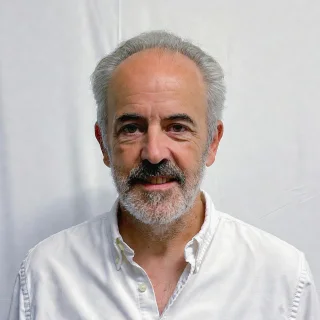
The ECB Executive has appointed Boris Kisselevsky, until now head of the office in Brussels, as General Secretary. He will take up the position on 1 November 2026.
The European Central Bank (ECB) has taken a new step in the reorganisation of its executive leadership. The Executive Committee has appointed Boris Kisselevsky as General Secretary, a key position in the governance of the institution. The French national will assume office on 1 November 2026, according to an official statement from the organisation.
A career spanning nearly three decades at the ECB
Kisselevsky, who has been at the ECB since 1998, has held the position of head of the Representation Office at the Eurotower in Brussels since 2017. There, he has been the liaison with community institutions, advising ECB decision-makers and supporting members of the Executive Committee and the Supervisory Board in their missions in the Belgian capital.
His career includes tenures at the IMF and the Central Bank of Russia, as well as positions of responsibility in international relations and media. He was deputy head of the Press Division and the Outreach Division, and for three years worked as a financial advisor at the French Treasury. Before joining the ECB, he was an economist at the Bank of France. He holds a law degree from the University of Paris-Panthéon-Assas, a degree in Economics from Sciences Po, and an MBA from ESSEC.
What does the General Secretariat do?
The General Secretariat of the ECB is the administrative heart of the institution. It is responsible for directing the decision-making process, fostering knowledge exchange, and ensuring good governance and internal administration. In his new role, Kisselevsky will be responsible for the strategic direction of the general directorate and the management of staff in its three divisions. Additionally, he will represent the ECB in various internal and external committees and at high-level forums.
The appointment signifies a change in leadership: Kisselevsky replaces Petra Senkovic, who has been appointed General Director of Legal Services. This move is part of the regular rotation in senior positions at the ECB, which seeks to maintain efficiency and specialisation in critical areas.
For readers interested in monetary policy and European governance, this change does not alter the ECB's direction but reinforces continuity in management. The Secretariat is an invisible yet essential cog: without it, the decisions of the Governing Council would not translate into concrete actions. Kisselevsky, with his profile as an economist and manager, arrives at a time when the ECB faces challenges such as inflation, the digitalisation of the euro, and banking supervision.
The ECB has reminded that the complete list of executives is available on its website. The new General Secretary will take the reins on 1 November, just as autumn brings new monetary policy meetings and updates to economic projections.
You may also like


