
The Congress of Deputies has given the green light to the pathway that will allow around 47,000 mutualists to transfer their contributions to the RETA. The measure, with an estimated cost of 5.204 billion, aims to correct the minimum pensions left by the individual capitalisation system.
The full Congress of Deputies approved this Thursday the so-called 'pathway to RETA', a measure that will allow around 47,000 mutualists —mainly architects, lawyers, procurators, and doctors— to transfer their contributions to the Special Regime for Self-Employed Workers (RETA) to access a minimum retirement pension. The estimated cost by the Government amounts to 5.204 million euros, although other sources raise the number of affected individuals to several hundred thousand.
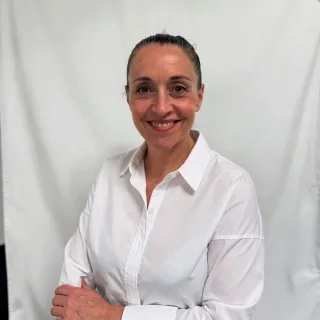
The initiative, which has received broad parliamentary support, puts an end to years of uncertainty for these liberal professionals who, upon retirement, found themselves with pensions ranging from 400 to 500 euros, far below the minimum pension of the public system. Pontevedra architect Mónica Sánchez, 54, sums it up:
“I found out that the pension I was going to receive was not even the minimum, but a pension I cannot live on, of just over 400 euros. I would have to keep working until the end of my life. Finding out like that is a shock. I felt completely deceived.”
The origin of the problem: from collective capitalisation to individual
Mutualism was born as a system of intergenerational solidarity, predating Social Security, in which guilds created common funds to cover retirements and contingencies. However, in 1995, the Private Insurance Regulation Law forced mutual societies to migrate to a model of individual capitalisation, where each mutualist accumulates their own savings. This change, which went unnoticed by many, caused pensions to drastically decrease as life expectancy and inflation increased, while investments yielded less. As Isabel Rabel, spokesperson for the RETA Pathway Platform, explains:
“Individual capitalisation is a failed system, it is not sustainable. You open a box, put in 100 euros a month, and when you retire, you open the box and live off what’s left, without IPC adjustment, a truly barbaric system.”
Until now, mutualists who wanted to switch to RETA lost all their contributions, which discouraged most. The approved pathway allows the transfer of those years of contributions to the public regime, counting them as if they had been made in the RETA, with a cost to the State that will be covered by the General Budgets. The details on who can benefit and under what conditions will be specified in the regulations that must be developed in the coming months.
Lack of transparency and mobilisations
The spokesperson for the platform, Antonia Moyano, a lawyer since 1989, recalls that when mutual societies transitioned to the individual model, the option to switch to RETA existed but was unknown to most. “There was no transparency. Professional colleges did not inform adequately,” she claims. Mobilisations in recent years, with gatherings and protests, have forced the Government to act. Architect Mónica Sánchez, who works in Pontevedra, points out that architects were among the last to find out: “Lawyers were the first, and WhatsApp chats and social networks started to emerge… and we began to discover a bit of the story.”
For mutualists, the approval of the pathway represents a relief, although there are still loose ends. The approved text establishes a two-year period for interested parties to request the transfer, and it is expected that Social Security will publish a guide with the steps to follow. Affected individuals will need to prove their time with the mutual society and the years contributed, a process that could be complex for those who have been retired for decades. The Government estimates that the measure will particularly benefit those over 50, who are the ones with the most years accumulated in the mutual system.
The news has been received with hope, but also with some skepticism. “We have been fighting for years, and now we need to ensure that the fine print doesn’t play a trick on us,” warns Rabel. Meanwhile, Mónica Sánchez is already making plans: “I will be able to retire with dignity, without having to work until I’m 80. That’s what matters.”
You may also like


