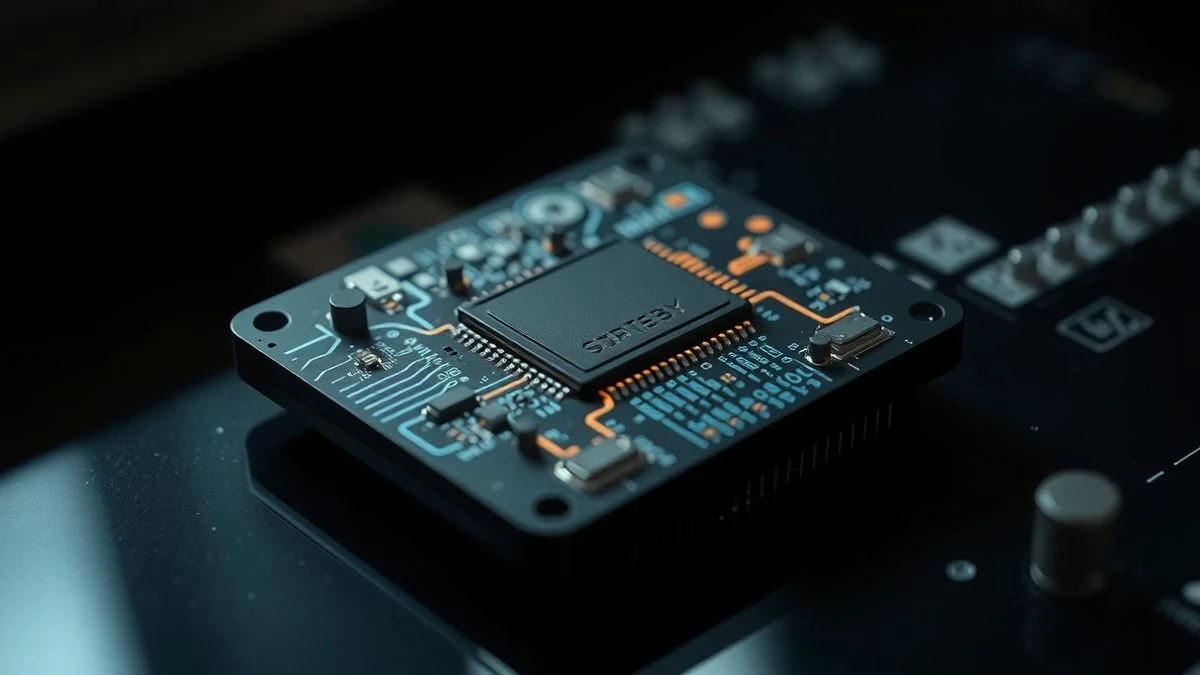
Samsung Electronics returns to the PC chip market with GAIA, a 4-nanometre AI accelerator that integrates PIM memory technology. Mass production will begin in late 2027.
The South Korean giant Samsung Electronics has unveiled GAIA, a new artificial intelligence accelerator specifically designed for personal computers. This chip, manufactured using a 4-nanometre process, marks Samsung's return to the PC semiconductor market after more than a decade, and aims directly to compete with the sector's leaders: Nvidia and Qualcomm.
GAIA is not a conventional processor. It is a neural processing unit (NPU) specialised exclusively for artificial intelligence tasks. The company describes it as a PC adaptation of the NPUs already integrated into its Exynos processors for smartphones, but enhanced to handle more demanding workloads.
PIM Technology: Processing in Memory
One of GAIA's key innovations is the integration of Processing-in-Memory (PIM) technology. This is next-generation DRAM that allows computing operations to be performed directly within the memory, without the need to constantly transfer data between the processor and RAM. This reduces latency and energy consumption, a critical factor in mobile and portable devices.
According to Samsung, the combination of the NPU with PIM technology offers superior energy efficiency compared to GPU-based solutions, which currently dominate the AI acceleration market. This could provide a decisive advantage for the AI-enabled PC market at a more accessible price, especially in developing countries where energy consumption and cost are determining factors.
Collaborations and Roadmap
Currently, Samsung is supplying GAIA prototypes to leading PC manufacturers. Lenovo in China and HP in the United States are already testing the chip to validate its performance. Mass production is expected to begin by late 2027, putting Samsung in a race against time to carve out a niche in a market dominated by Nvidia with its GPUs and Qualcomm with its Snapdragon X.
Additionally, sources close to the company have confirmed that Anthropic, the American company behind the generative AI model Claude, has initiated talks with Samsung to explore a potential collaboration in manufacturing its own artificial intelligence chip. Although details have not been disclosed, this partnership would strengthen Samsung's position as a custom semiconductor manufacturer.
Samsung's return to the PC chip market, focused on artificial intelligence, could provide it with a competitive advantage, especially if it manages to combine the NPU with PIM technology, resulting in greater energy efficiency compared to GPU-based solutions.
For the end user, the arrival of GAIA means a greater availability of PCs with integrated artificial intelligence capabilities, focusing on energy efficiency and performance in tasks such as natural language processing, image recognition, and virtual assistants. The first devices equipped with this chip will not hit the market until 2028, but competition promises to lower prices and accelerate innovation.

You may also like