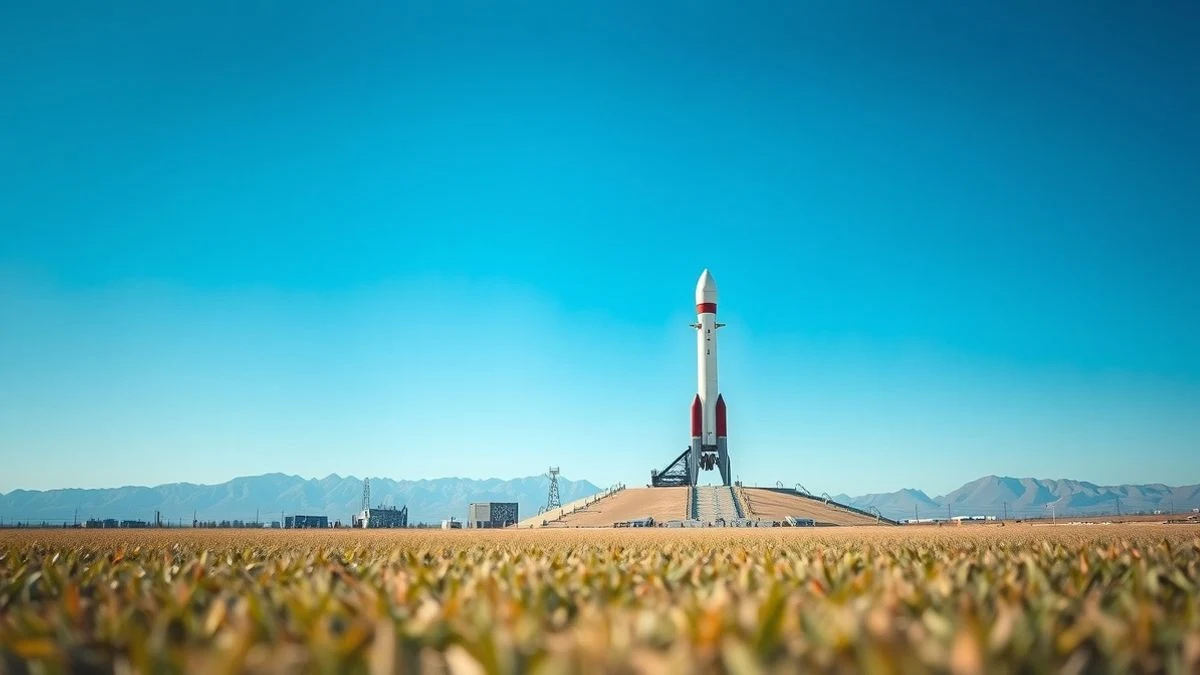
Startup Bizu Space successfully launched the FTL-Perseu, Brazil's first liquid propulsion rocket, opening the door to greater space autonomy.
A team of Brazilian engineers has achieved what until now seemed reserved for giants like SpaceX. On May 29, the startup Bizu Space launched the FTL-Perseu rocket in Virgínia (Minas Gerais), the first vehicle in the country fully powered by a liquid propulsion system from takeoff. The flight, dubbed Mission Trem Baum, reached 1,272 meters in altitude and the rocket was successfully recovered via parachute.
The key to liquid propulsion versus solid
The main advantage of liquid propulsion is control. While a solid motor operates like an uncontrollable pump, liquid allows for thrust modulation, like a car's accelerator. According to Arthur Bahdur, CEO of Bizu Space, this capability is crucial for missions that require real-time speed and trajectory adjustments. The FTL-Perseu, measuring 4.5 meters long and weighing 70 kg, uses hydrogen peroxide as an oxidizer and aviation kerosene as fuel. In its first flight, a reduced payload was used to ensure safety.
A small team with big ambitions
Bizu Space consists of 14 professionals trained at the Aeronautics Technological Institute (ITA). Before the launch, they conducted 61 simulations over the course of a year. The company installed private infrastructure at the Technological Park of the University of Vale do Paraíba (Univap), named T8, which includes a chemical laboratory and test bench. The project aims to reduce external dependence: most materials, such as fiberglass, stainless steel, and aluminum, are sourced in Brazil.
The path towards Brazilian space autonomy
The FTL-Perseu is a step towards technological independence. Additionally, Bizu Space is part of the Brazilian Microlauncher Consortium (MLBR), a federal government initiative backed by the Brazilian Space Agency (AEB) and the Financing Agency for Studies and Projects (Finep). The first collective launch of the MLBR is expected to take place starting in 2027 from the Alcântara Launch Center in Maranhão. For Bahdur, these achievements respond to a "national dream": to develop, manufacture, and launch their own space vehicles.
This news marks a milestone for the Brazilian aerospace sector, which aspires to compete in the small satellite launch market. Liquid propulsion allows for stopping and restarting the engine in flight, which is essential for orbital maneuvers. For Spanish companies in the sector, Brazil is emerging as a technological partner, capable of offering cheaper and more autonomous launch services.

You may also like