
Piero Cipollone, a member of the ECB's executive committee, urges the removal of internal trade restrictions and the promotion of renewables to reduce energy dependence and strengthen competitiveness.
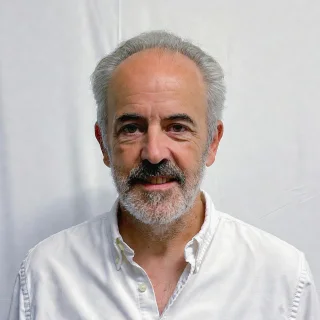
Piero Cipollone, a member of the European Central Bank (ECB) executive committee, has called for the elimination of barriers that still hinder the free movement of goods and services within the European single market as a way to strengthen companies on the continent against external shocks. He made this statement in an interview published on August 24, 2026 by the Italian media ilsussidiario.net.
In his remarks, Cipollone emphasised that Europe's main asset is its large internal market, with 450 million consumers among the wealthiest in the world. However, reports from Mario Draghi and Enrico Letta document that internal restrictions prevent companies from expanding and achieving economies of scale, particularly in sectors such as IT, finance, and automotive.
“Before considering any other measures, we need to start making the most of existing opportunities by reducing barriers to cross-border expansion of companies,” he stated.
The ECB official pointed out that creating European champions capable of competing globally does not necessarily require mergers, but must respect European competition law and the free decision-making of the companies themselves.
Regarding the role of the ECB, Cipollone reminded that its mandate is to maintain price stability, which is essential to reduce uncertainty and allow companies to plan. In the face of a potential rise in inflation due to supply shocks, such as that of oil, he advocated for a “well-calibrated” monetary policy that anchors medium-term expectations to the 2% target.
The economist also argued that fiscal policy, if used, should be temporary, selective, and limited to those who need it most, avoiding regressive effects. But he insisted that the structural solution lies in reducing dependence on fossil fuels and increasing the share of renewables in the energy mix.
“Whenever the price of oil or natural gas rises, more resources from European households and businesses are transferred to producing countries. If the share of renewables were to increase, those resources could remain in Europe,” he explained.
Cipollone thus supported the flexibility of the national escape clause for investing in energy security, modified by the European Commission in early June. For him, this not only protects households and businesses but also strengthens competitiveness by reducing energy costs.
Regarding real wages, the ECB member warned that an external shock impoverishes Europe and that the only lasting response is to raise productivity, which is key to long-term material welfare growth.
The interview, conducted by Lorenzo Torrisi on August 10, 2026, comes at a time when European companies face new challenges from external disruptions and the debate on the integration of the single market is back on the table.
You may also like


