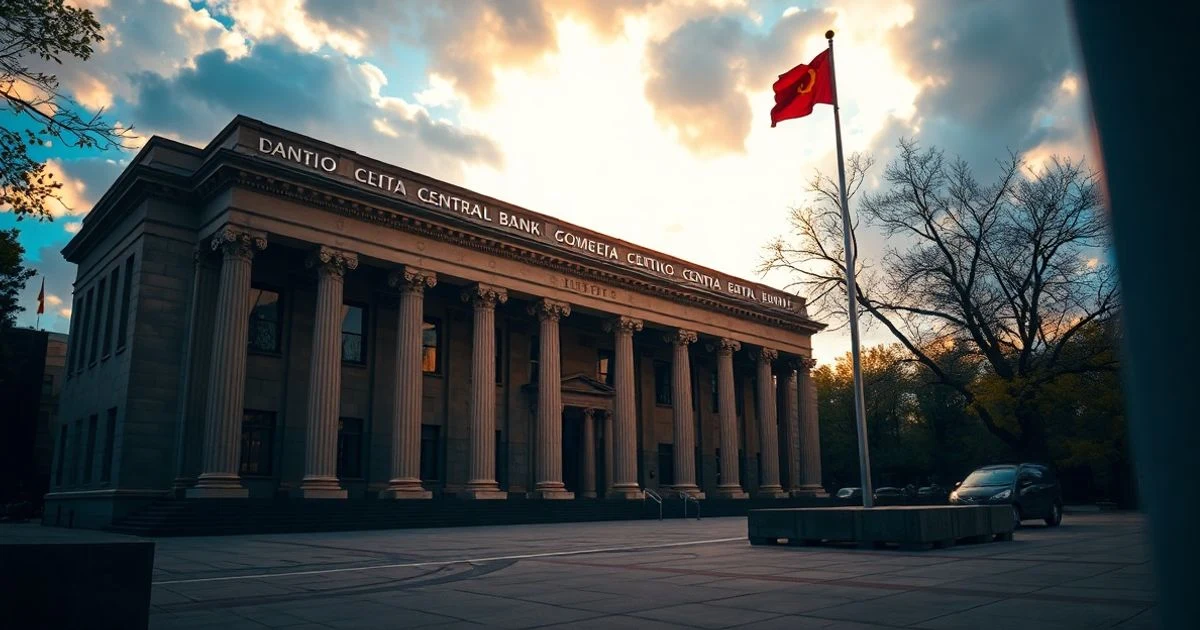
The IMF and MIT experts warn that premature monetary easing could keep inflation above target, following post-pandemic calibration errors.
Central banks around the world face a new warning: if they cut interest rates too quickly, they risk inflation remaining persistently above target. This was stated by economists from the International Monetary Fund (IMF), MIT, and several central banks gathered in Tashkent, Uzbekistan, at the first Monetary Policy Dialogue.
Athanasios Orphanides, a professor at MIT and former governor of the Central Bank of Cyprus, was blunt: "If we look at the experience after the pandemic, many central banks around the world did not calibrate policy well and ended up with inflation far above the definitions of price stability that had been set." In his opinion, the risk of repeating that mistake is real if premature monetary easing is chosen.
The challenge of cascading economic shocks
The problem is not just getting the timing of the cut right. For central banks, the underlying challenge is to preserve credibility when price shocks, supply chains, and demand are increasingly difficult to anticipate. Koba Gvenetadze, the IMF resident representative in Uzbekistan, stressed that "over the past five years there have been continuous shocks, and therefore the lessons learned from those shocks and the exchange of experiences are absolutely fundamental."
The pandemic, Gvenetadze added, demonstrated why central banks cannot always treat supply disturbances as temporary: "From the experience of COVID we have learned that, although there are supply shocks that do not initially affect inflation, they can start to do so later on."
Inflation targets: the framework that works
In this context, Orphanides defended the inflation target framework as one of the most effective frameworks for guiding monetary policy when economic conditions become harder to interpret. "A framework that, in my opinion, works very well, and which has also been adopted in Uzbekistan in recent years, is precisely that of inflation targets," he noted.
By focusing on stabilising inflation and maintaining price stability, the central bank lays the groundwork for all other adjustments that must occur when the economy suffers a shock. Uzbekistan is moving towards a full inflation target regime as part of broader market reforms. According to figures presented by the Central Bank, inflation has fallen from nearly 20% in 2018 to 5.5% in May 2026. Inflation expectations of households and businesses have also decreased, from an average of 20% to around 10%.
These figures are important for the transition to the inflation target regime, which depends not only on lower overall inflation but also on businesses and households trusting that price increases will remain under control.
Less dollarisation, more confidence in the local currency
The Central Bank of Uzbekistan also cited lower dollarisation as a sign of growing confidence in macroeconomic stability. Foreign currency deposits now represent around 20% of total bank deposits, down from nearly 50% previously, while dollarised credit stands at 37%, down from 54%.
For investors and businesses, lower dollarisation may reflect greater confidence in the national currency and make monetary policy more effective through local financial markets. Samigjon Inogamov, head of the Monetary Policy Department at the Central Bank of Uzbekistan, explained that authorities are implementing reforms such as developing deeper domestic financial markets, liberalising the financial account, and creating a stronger capital market.
Inogamov noted that the central bank will maintain restrictive monetary conditions to achieve its inflation target and strengthen the credibility of monetary policy. For investors and analysts, the lesson is clear: central banks cannot afford to repeat the mistakes of the post-pandemic era, and any move towards lower rates must be backed by solid data confirming that inflation is indeed under control.

You may also like