
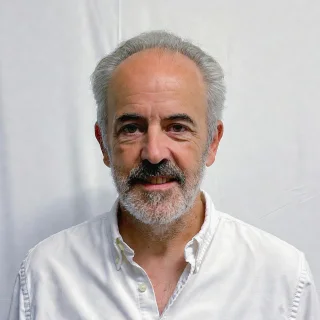
The General Director of Institutional, European and Transparency Relations, Galo Nuño, leaves the organisation a year after his appointment to focus on research.
The Bank of Spain loses another senior official. Galo Nuño, General Director of Institutional, European and Transparency Relations, has submitted his resignation just a year after taking up the position, as confirmed by the organisation. Nuño leaves the entity to return to academia and research.
His departure adds to that of Eva Valle, whom he replaced in July 2025 and who also spent less than twelve months in the role. With Nuño's exit, changes at the top of the bank have accumulated since José Luis Escrivá became governor.
The Executive Commission of the Bank of Spain has approved a reorganisation to fill the gap. A new General Directorate of Institutional Relations, Transparency and Conduct is being created, which will integrate the functions of transparency, openness to society, and financial conduct.
At the helm of this new directorate will be Alberto Ríos, until now General Director of Financial Conduct and Banknotes. Under his command will be the Conduct Department, the new Transparency and Branches Department, and the Coordination Department. Inés Calderón will assume the position of Deputy General Director.
Additionally, the organisation has modified other areas. The General Directorate of Operations, Markets and Payment Systems, led by Juan Ayuso, will take on functions related to cash, which previously fell under the General Directorate of Financial Conduct and Banknotes.
The Executive Commission has also opened processes to fill several senior management positions. Among them, the General Secretariat, following the expected departure of Francisco Javier Priego, and a new Deputy General Directorate linked to the data area.
Galo Nuño arrived at the Bank of Spain with an extensive background in the economic and financial field. Before becoming General Director of Institutional Relations, he was Deputy General Director of Economics and held various positions related to monetary policy and capital markets. He also worked at the Bank for International Settlements (BIS) and the European Central Bank (ECB).
His departure poses a new challenge for Escrivá, who continues to restructure the bank's leadership. The changes in the organisation aim to gain efficiency and adapt to new functions regarding transparency and financial conduct.
For readers interested in monetary policy and financial regulation, these departures and reorganisations reflect instability at the top of the supervisory body. The open selection processes will determine the profile of the next leaders, which may influence the bank's direction in the coming months.
You may also like


