
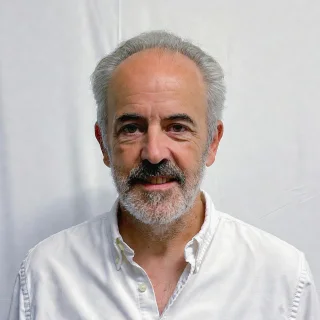
Alfonso Prada, ambassador of Colombia in France, warned this Tuesday of "institutional risks" following the announcement by elected president Abelardo de la Espriella to eliminate the office of the high commissioner for Peace and other key entities.
The ambassador of Colombia in France, Alfonso Prada, issued a stern warning this Tuesday about the consequences that dismantling the institutions created to implement the 2016 Peace Agreement would have for the country. His statements came after the elected president, Abelardo de la Espriella, confirmed the elimination of the office of the high commissioner for Peace, the Implementation Unit of the Final Agreement, and the Human Rights advisory.
For Prada, these decisions "aim to disregard the constitutional, legal, conventional, and international commitments, all binding on the Colombian state." The diplomat, who was Minister of the Interior at the beginning of Gustavo Petro's government, emphasized that the new government "does not only challenge the opposition," but also attacks the UN mission in Colombia, its Security Council, the European Union, and International Justice.
A shift in peace policy
De la Espriella justified the decision by stating that "there will be no more false peace processes in my government". The elected president also announced the restructuring of the Casa de Nariño with the elimination of 229 positions, which, according to his calculations, will save nearly $10 billion monthly. "Every decision has the same purpose: to restore security, trust, development, and hope to Colombians," he declared.
The new government has ordered the appointed ministers of Defence and the Interior, retired General Jorge Mora and the former senator, to dismantle "the illusion of false peace" as soon as the presidency is assumed on August 7. This stance contrasts with that of the current ambassador, who called for reflection within the elected president's team: "I hope that the sensibility of some members of that team leads them to reason calmly and seek paths of understanding rather than violence."
Political and social reactions
The elimination of the Implementation Unit of the Final Agreement and the position of commissioner for Peace has generated strong positions among political and social sectors. The party En Marcha, led by former minister Juan Fernando Cristo, emphasized that "the 2016 Peace Agreement is a state policy" and rejected any initiative that undermines the institutions created for its implementation.
"The final agreement is not an ordinary public policy nor an exclusive program of a government. It is an agreement signed by the Colombian state, incorporated into the legal framework, accompanied by guaranteeing countries, and permanently supported by the United Nations Security Council through its verification mechanism," stated the collective. For them, its implementation transcends electoral cycles and constitutes an institutional commitment of the state to the victims, the territories, and the international community.
De la Espriella also hardened his rhetoric regarding the Special Jurisdiction for Peace (JEP) and the treatment of former FARC leaders, such as Rodrigo Londoño, alias Timochenko. "Today we see the war criminal alias Timochenko on an international tour with the safe conduct of those who seek to wash his crimes with the disguise of a tribunal: the JEP. That bandit Timochenko deserves to be imprisoned for life," stated the elected president.
In response, former minister Prada was emphatic: "We are no longer in a campaign; now we must govern with the Constitution in hand." The ambassador also addressed the former combatants who signed the peace agreement, urging them to remain calm and reminding them that they are accompanied by a huge and influential institutionality and a national and international community that has guaranteed compliance with the agreements.
For Colombians, these decisions would represent a radical change in peace policy, with possible implications for the legal security of former combatants and international trust. On August 7, with De la Espriella's inauguration, it will be known whether these measures are implemented as announced or if, as Prada hopes, sensibility prevails.
You may also like


